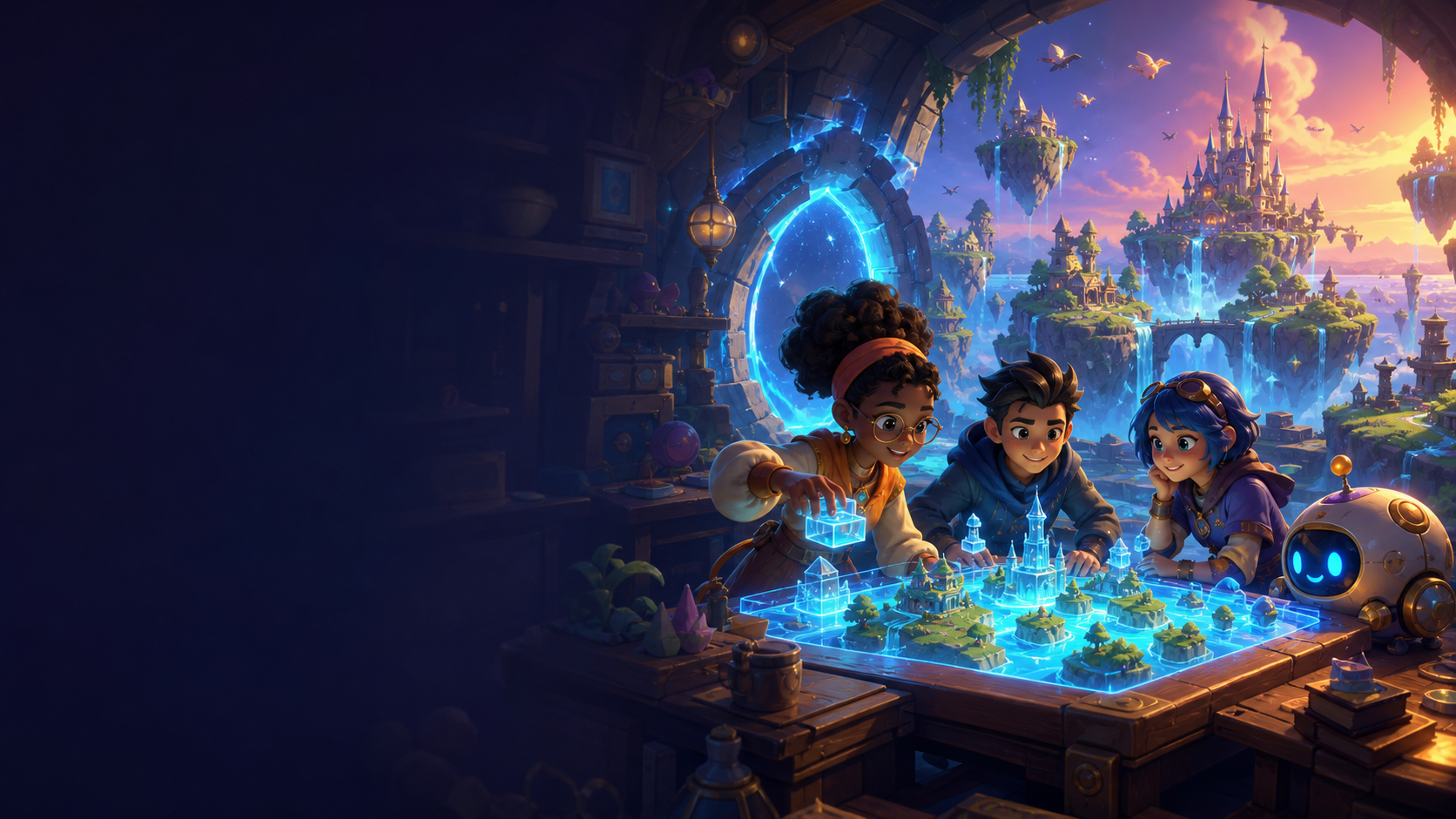
Game creators shaping a glowing world map beside a portal to a floating-island adventure world
Beta

How Fusionery works

From an idea to a game players can enter.

Fusionery connects creative direction, structured game design, runtime generation, live operation, and public release in one working system.

Start building

The SaaS workflow

One operating loop for making games.

Instead of moving an idea through disconnected briefs, asset folders, prototypes, servers, and storefronts, Fusionery keeps the game’s creative and operational state connected.

01

Create

Describe the experience you want to make.

Start with a game foundation or a direct prompt. Fusionery turns that direction into a structured blueprint of worlds, player roles, objects, actions, goals, scenarios, and presentation.

  • Choose a starting game foundation
  • Shape rules and moment-to-moment play
  • Compose reusable gameplay systems
02

Build

Generate a runtime you can inspect.

The versioned blueprint drives the build. Bring in approved assets, validate the output, and prepare the game for web, mobile, and Steam while it is still taking shape.

  • Maintain versioned, reviewable game data
  • Assign assets to meaningful runtime roles
  • Validate web, mobile, and Steam builds
03

Operate

Run sessions with the game in control.

Publish the release, create multiplayer lobbies, and keep authoritative game state and crossplay players visible from the studio.

  • Publish the current playable release
  • Operate supported multiplayer sessions
  • Observe runtime and release signals
04

Reach players

Make the release discoverable.

Fusion Castle gives every Fusionery-built public release a clear home. Players find a game, enter its current build, and return as the world evolves.

  • List published releases on the marketplace
  • Link players to the current build
  • Keep studio and player journeys connected

Powered by Godot

Godot is the engine underneath the playable build.

Fusionery keeps the creative direction, versioned blueprint, asset decisions, release workflow, and player destination connected. Godot turns that structured game definition into the runtime project that can be validated, previewed, exported, and operated.

Generated runtime project

project.godot
  1. 01
    Version-bound source

    Each build starts from a clear blueprint version instead of an untracked handoff.

  2. 02
    Engine-shaped output

    Fusionery generates the Godot project and reusable runtime modules needed to run the game.

  3. 03
    Validated before release

    Headless Godot validation and build records make failures visible before a preview or export reaches players.

  4. 04
    One project, many paths

    The validated runtime can drive browser previews, client exports, and the server-side game runtime.

Managed, not manual

You make the game. Fusionery handles the engine work.

Godot powers the runtime, but it does not need to become another tool you have to learn or operate day to day.

Do I need Godot experience to make a game with Fusionery?
No. Shape the game through Fusionery; the runtime project, validation, builds, and release workflow are managed behind the scenes.
Do I have to open or manage a Godot project?
No. Fusionery manages the generated Godot project and the surrounding build process, so you can focus on game direction, gameplay, assets, and the player experience.
What does Fusionery manage for me?
Your creative blueprint, asset decisions, runtime generation, validation, preview and export paths, and release workflow stay connected in one managed experience.
Why link to Godot resources?
They are there for creators who want to explore the engine underneath. They are optional—not a prerequisite for building and publishing through Fusionery.

What stays connected

The game is more than a generated build.

Fusionery keeps the data that defines the experience alongside the systems that turn it into a playable release. That means each new version has a clear creative intent and a visible operational path.

Blueprint

Structured source of truth for the world, gameplay, presentation, and release configuration.

Assets

Approved models, textures, audio, and variants assigned to runtime roles with traceability.

Runtime

Generated client builds, authoritative multiplayer state, lobbies, and hosted-server contracts.

Release

A public, current version players can discover, enter, and play from Fusion Castle.

Ready to make the first version?

Start with the game you want people to play.

Create your account